Some shoots start with a plan.
Others start with an idea that quietly lives in your brain all summer until you finally say, okay, it’s time.
This was very much the second kind.
Light painting has always fascinated me — the way motion, time, and light can work together to create something that feels otherworldly. This shoot in Louisville was part experiment, part creative play, and part “let’s see what happens if we just try it.” Spoiler alert: magic happened.
Below is a behind-the-scenes look at how this shoot came together — and how you can approach your own light painting experiments.
Styling
Before a single setting was dialed in, we started with vibe.
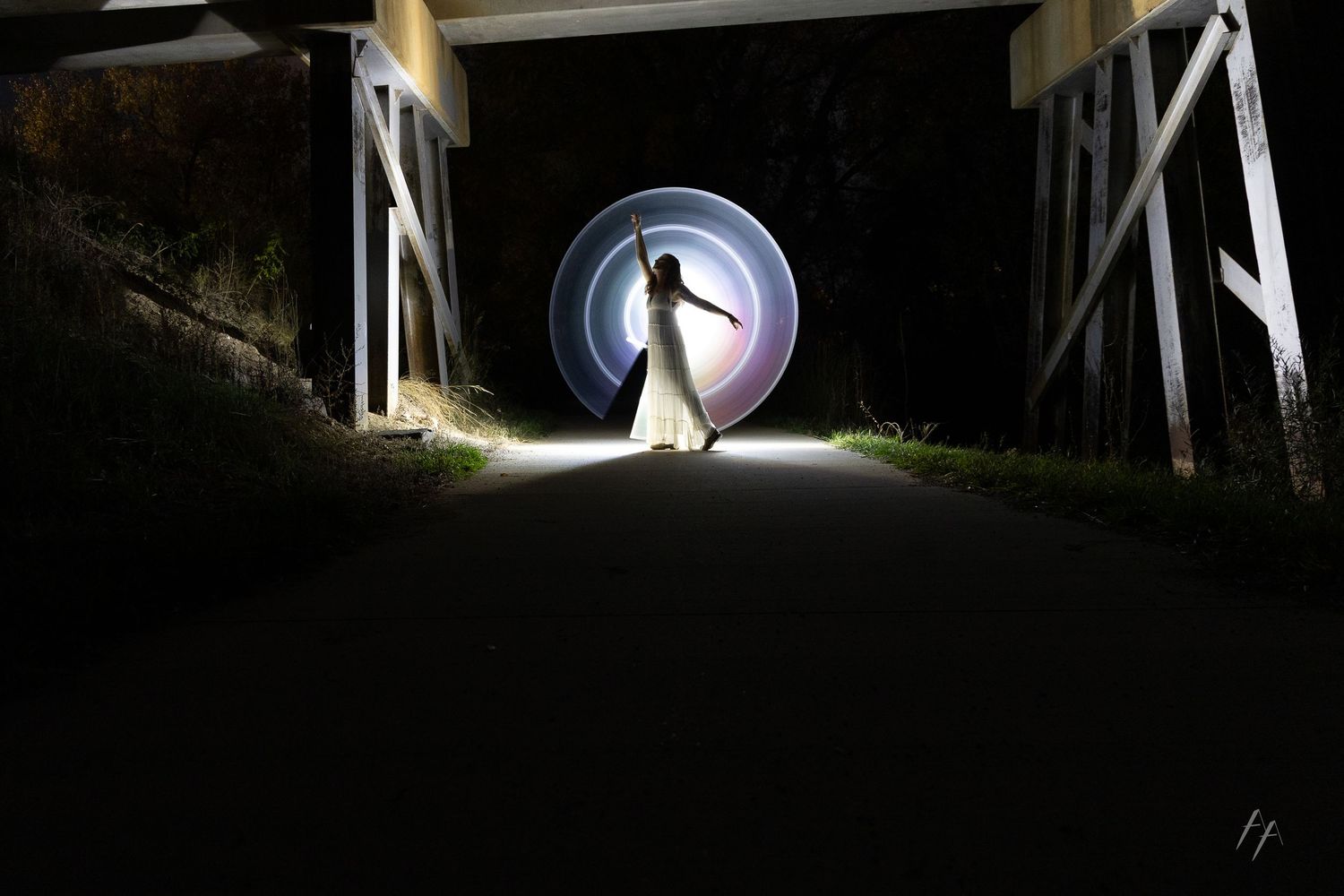
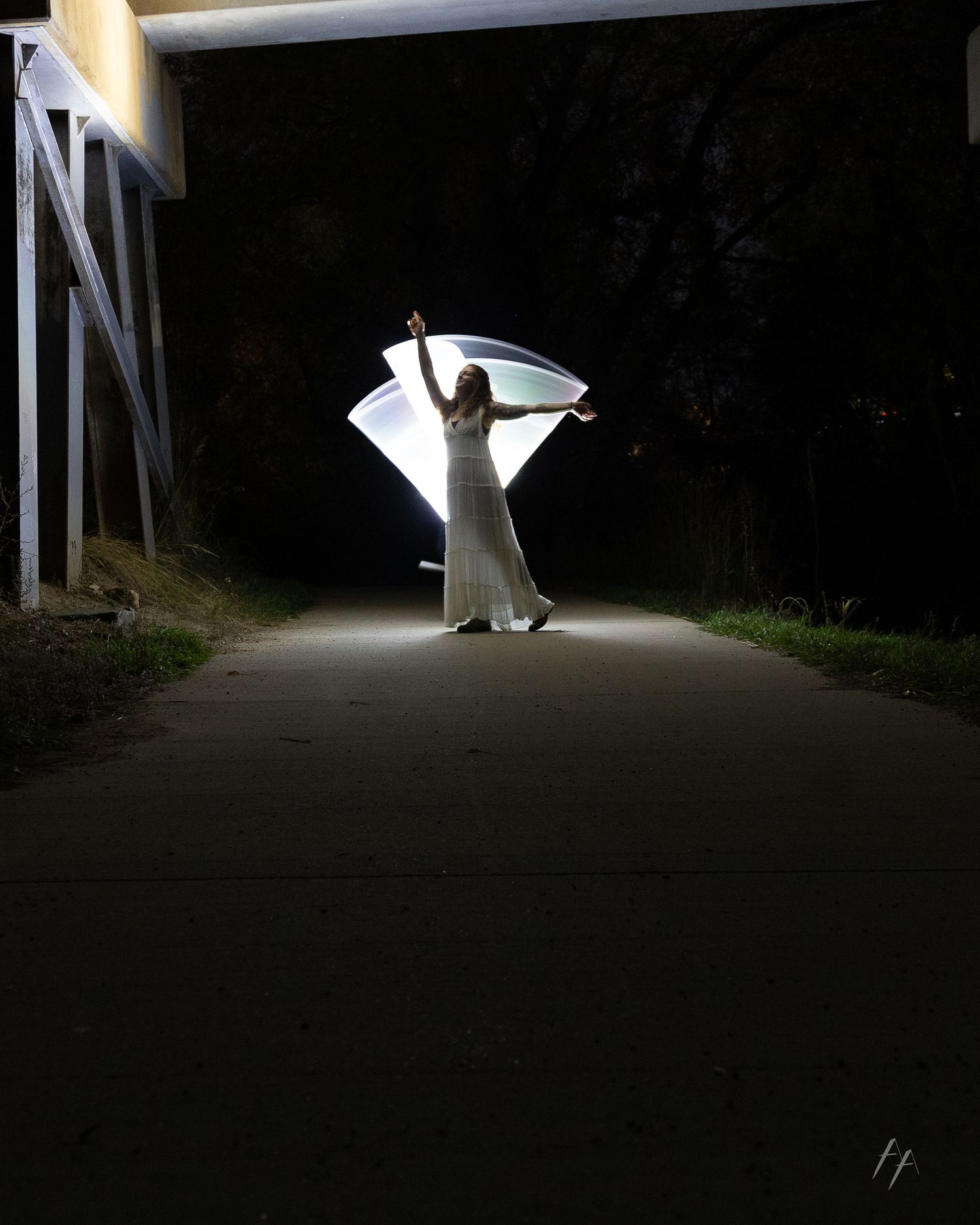
For this shoot, I wanted something ethereal, ghostly, and just a little surreal — like a figure caught between worlds. Maggie pulled out her wedding dress, styled her hair into elegant half braids, and instantly transformed into the perfect subject for light painting. The softness of the dress paired beautifully with the sharp, electric motion of the light, creating contrast that felt both delicate and powerful.
Styling matters so much in light painting. Because the light becomes the star, your subject’s wardrobe needs to support the story without competing with it.
Location Scouting
A Bike Ride, a Dream, and a Happy Accident
This location had been living rent-free in my head for months.
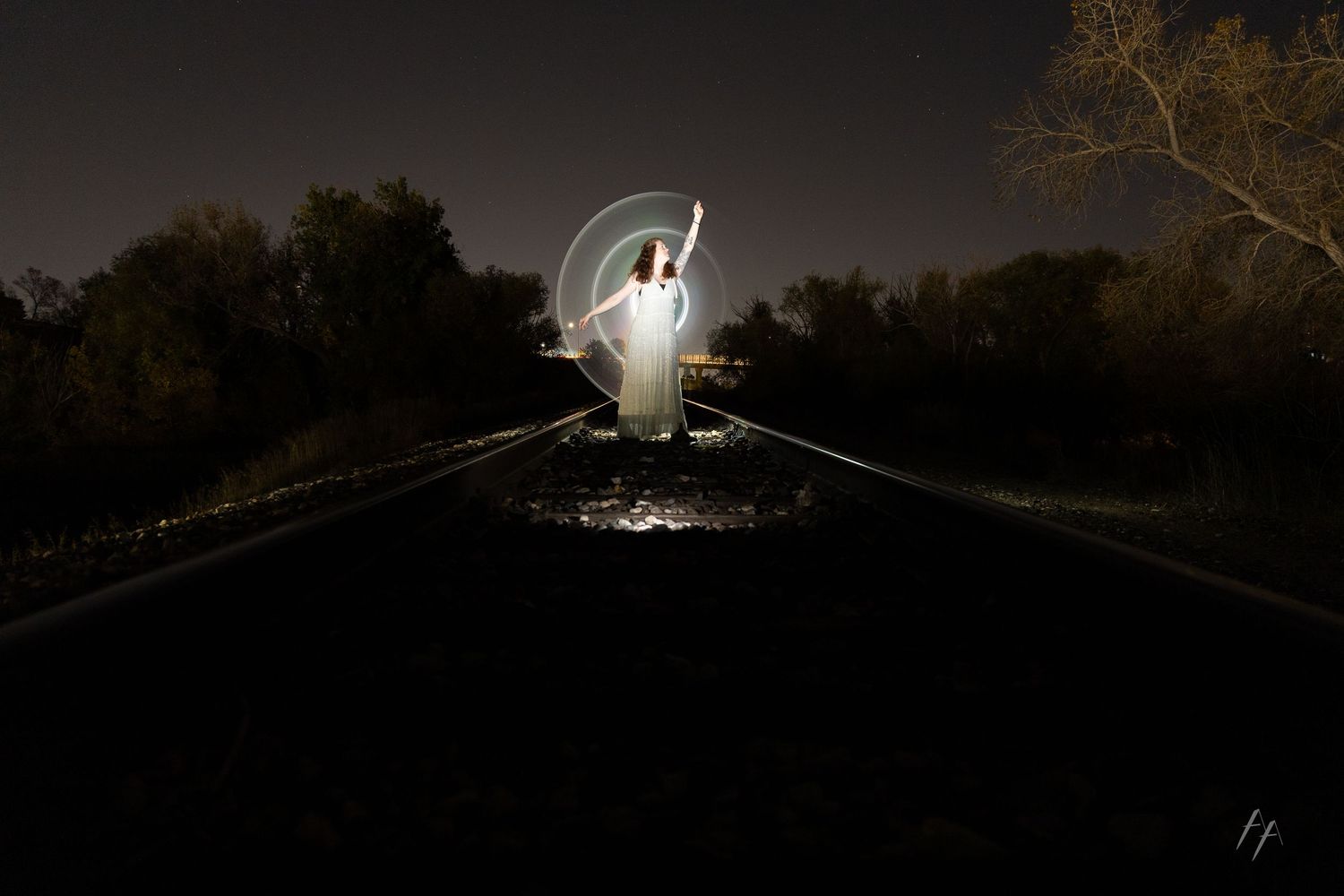
Earlier in the summer, I stumbled upon it while out on a bike ride — a quiet underpass tucked away from the road, framed by big overarching trees and an abandoned railroad track that added just the right amount of mystery. I remember thinking, one day, I’m shooting here.
What I hadn’t noticed back then?
The light pollution.
Turns out a nearby self-storage warehouse was lit up like a Christmas tree, flooding the area with more ambient light than I originally planned for. But as Bob Ross would say, it was a happy little accident. The extra glow gave the scene depth and separation without completely overpowering the light painting.
The takeaway: you don’t need a “perfect” location. Honestly, any dark, open area — underpasses, parks, trails, empty lots — can work beautifully for light painting if you embrace what the environment gives you.
Props
Like any good creative spiral, this started with watching way too many YouTube videos.
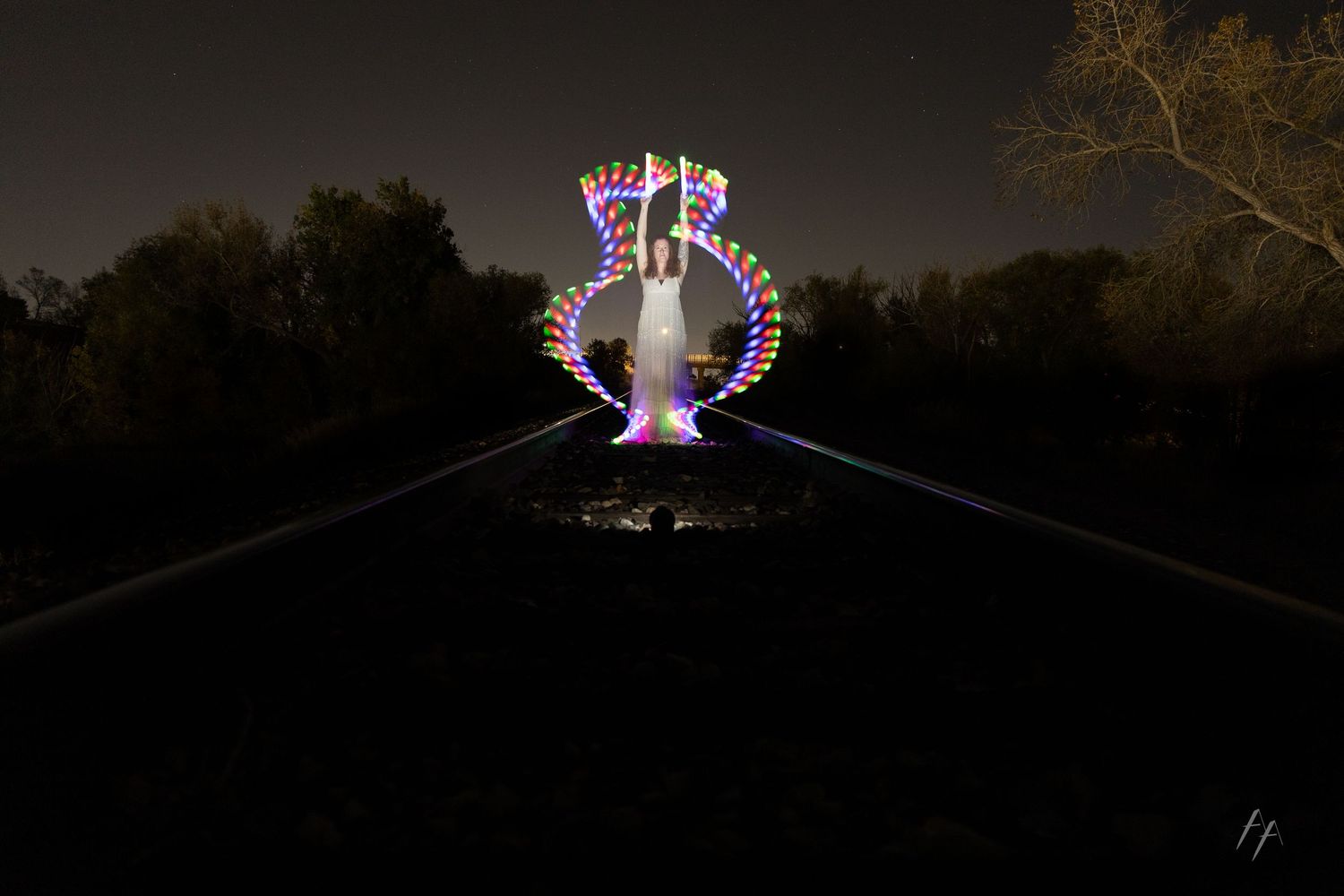
I built my first homemade light stick using:
- Clear acrylic fish tank drainage tubes
- Shiny silver tape
- Clear duct tape
- A flashlight
Was it elegant? No.
Did it work? Absolutely.
That said, it was far from perfect. With all the flailing, the clear duct tape started failing. By the end of the shoot, the flashlight had fully torn itself free and nearly went flying down a hill .
Post-shoot problem solving to the rescue: my husband designed and 3D printed a flashlight adapter that securely connects the flashlight to the tube, creating a much stronger joint.
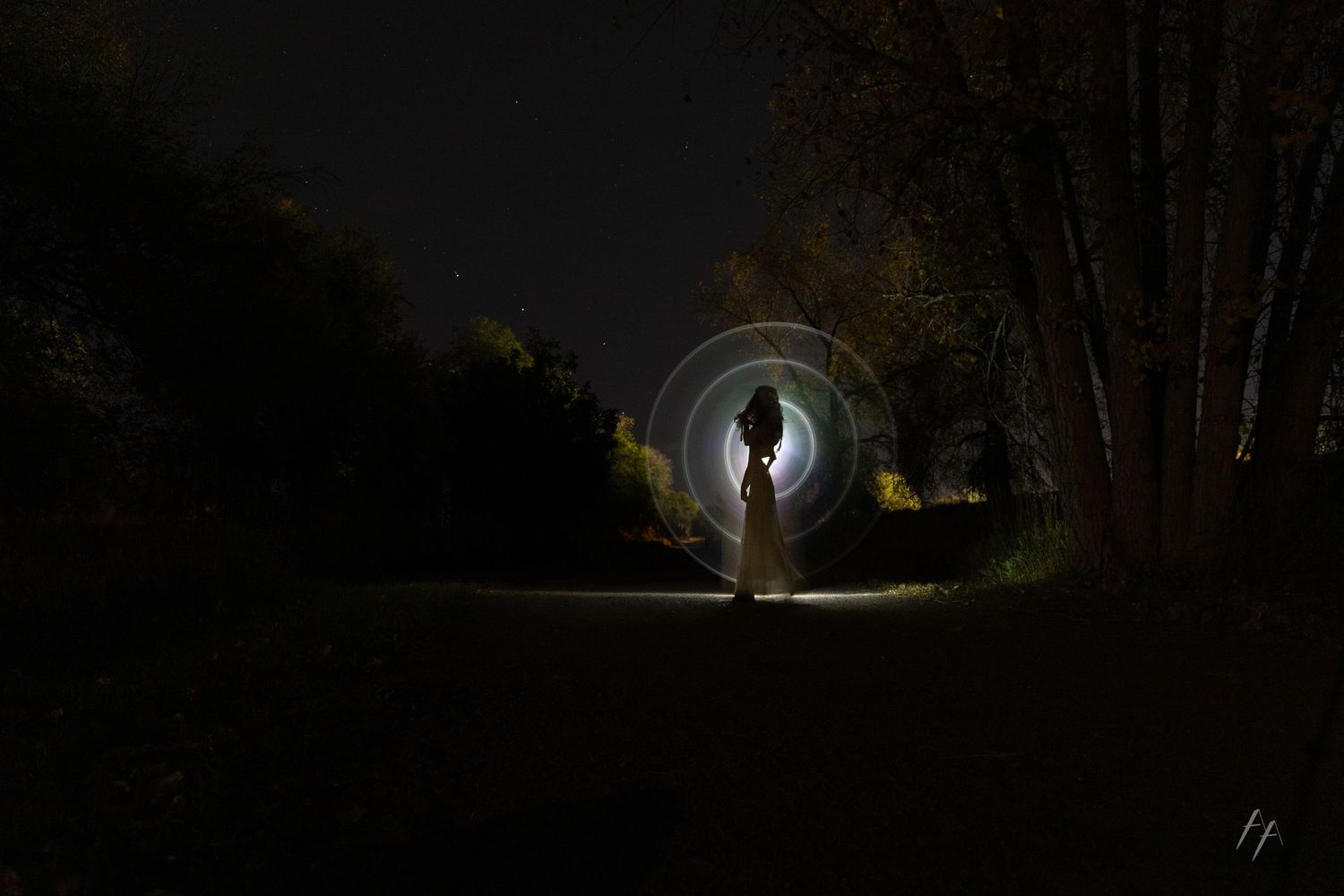
You’ll notice in the photos that the joints between tube sections bleed extra light — and honestly? I dig it. If I ever want cleaner lines, I’ll grab a longer tube or break out my actual lightsaber blades. Because... who doesn't have lightsabers at home? ....
The Setup
Experiment, Adjust, Repeat.
This was an iterative process to nail the shot. From the start, we needed stability for the long exposure, so we did the following:
- Set the camera on a tripod
- Use a remote flash trigger
- Shutter speeds of 1-2 seconds were ideal for 1 loop of the light stick
Shooting under the bridge gave more light onto the surrounding structure, which gave a natural framing to the subject, making your eye focus on them.
When we moved up to the top of the tracks, we wanted Maggie herself to pop more against the environment. So we added a remote off-camera flash fitted with a snoot and grid to control spill and keep the ambient light exactly where we wanted it, directly on our subject.
Light painting is part science, part art, and part “fuck around and find out.” The magic lives in the experimentation.
Want to Play With Light Too?
This shoot reminded me why I love experimental lighting so much — it’s creative freedom at its finest. If you’ve ever wanted to try something bold, weird, cinematic, or completely outside the box, I’m so here for it.
Reach out if you’re dreaming up an experimental lighting shoot of your own — let’s make something unexpected together.